01 · Drive base
A microcontroller for the motors, a computer for the thinking
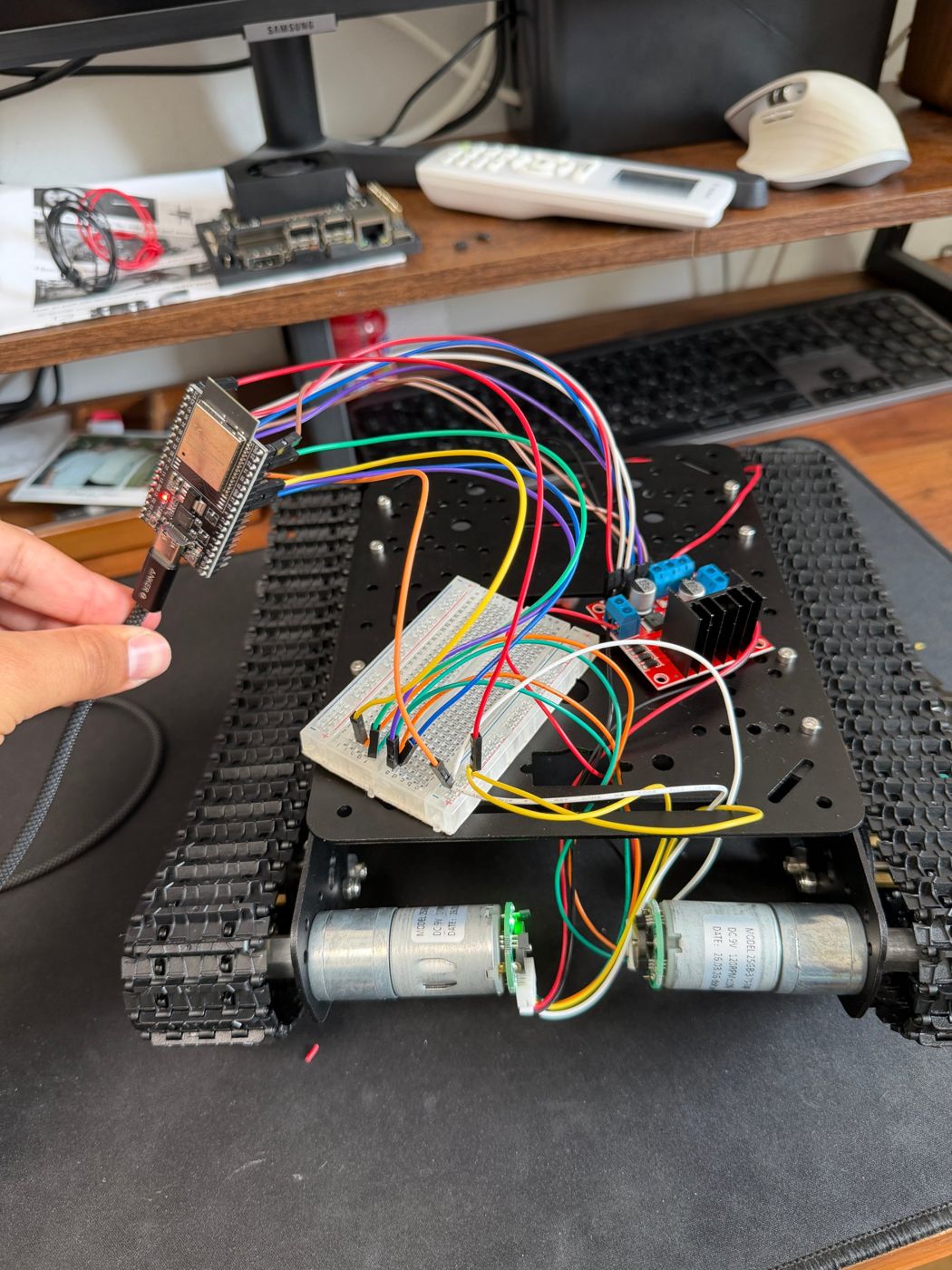
An ESP32 drives the tracks. The Jetson only sends speed commands.
Read more
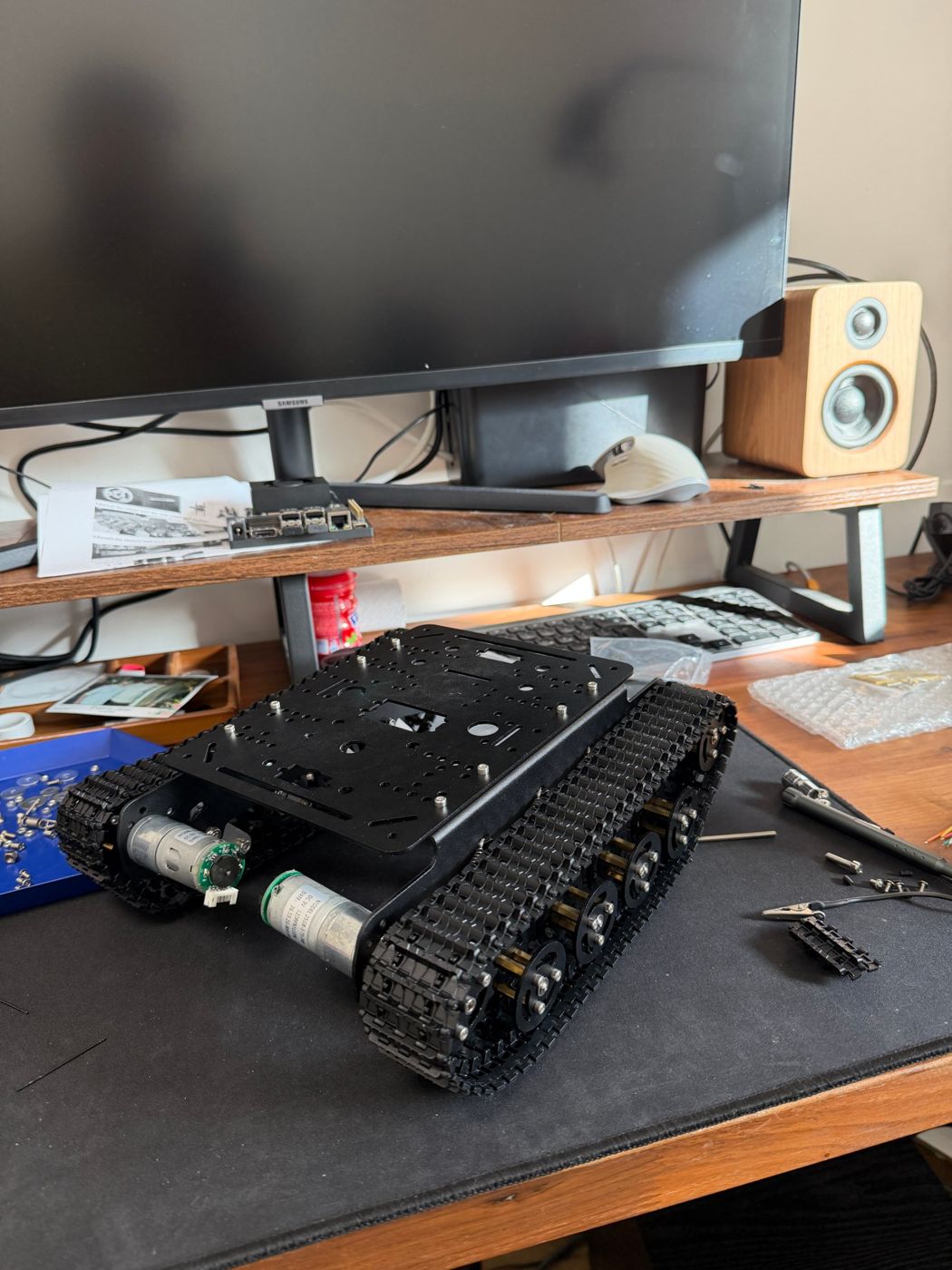
- TS100 tank kit, two 25 mm encoder motors, L298N driver
- USB serial commands
L<speed>,R<speed>
- No command for 500 ms means stop, and the PS5 controller always wins
- Encoders now in use for odometry (post 07)
WhyReal-time drive stays on the microcontroller. If the Jetson crashes, the robot stops.
ProblemTwo early ESP32 boards stopped working.FixThe boards were likely shorting to the metal plate. I insulated them and there were no failures since.
02 · Jetson and camera
Getting the first detections on the robot
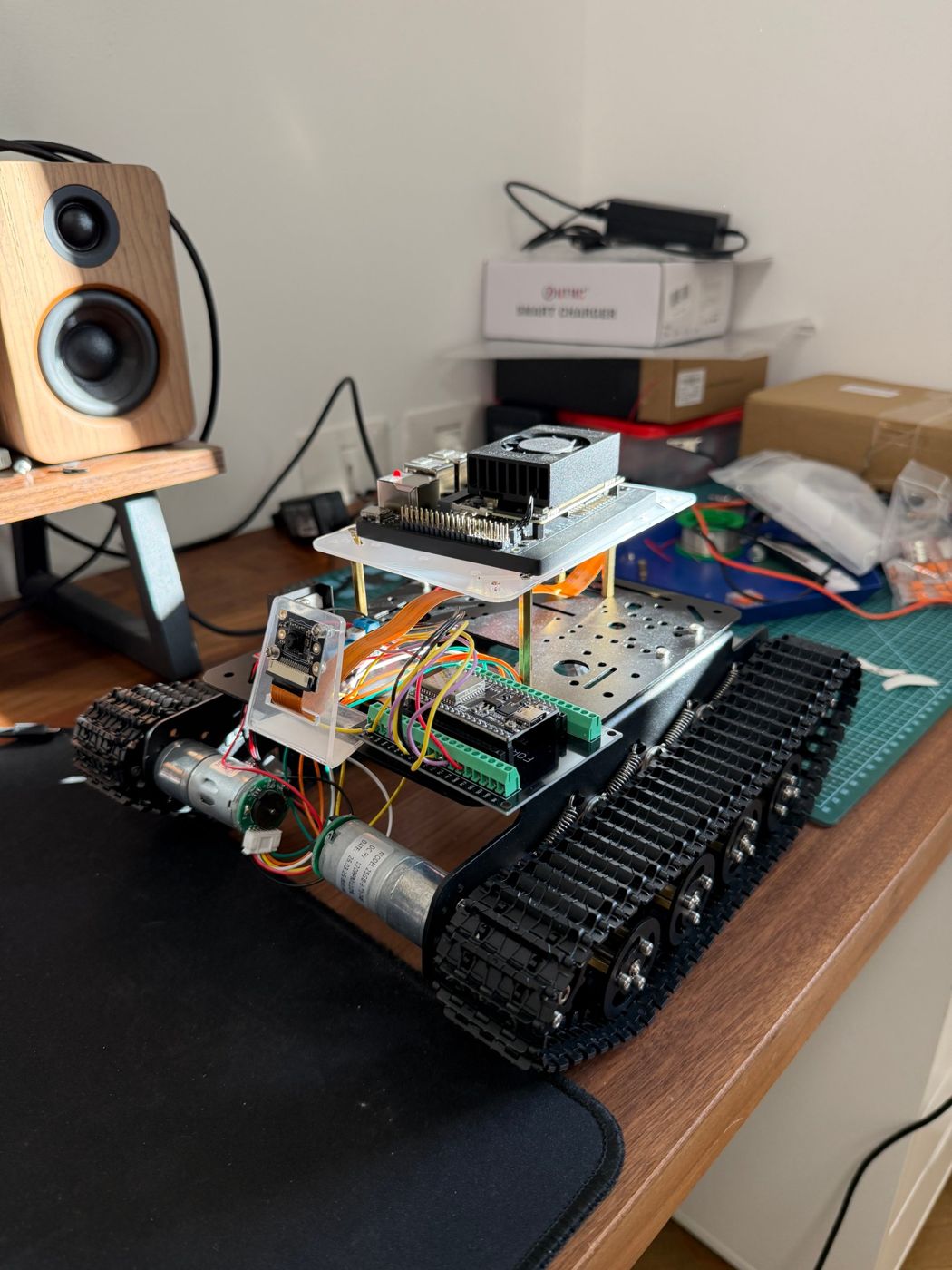
Jetson Orin Nano and an IMX219 camera, running YOLO on the live feed.
Read more
- 1280 × 720 at 30 fps over CSI, YOLO11n at about 25 ms per frame
- First closed loop: turns in place to follow a person (tethered)
ProblemNVIDIA's detector didn't run on TensorRT 10.3, and the image was upside down.FixSwitched to Ultralytics YOLO and set flip-method=2 in GStreamer.
03 · Vision, part 1
Off-the-shelf detectors don't know what a sock is
Ready-made models found the objects but named the socks wrong.
Read more
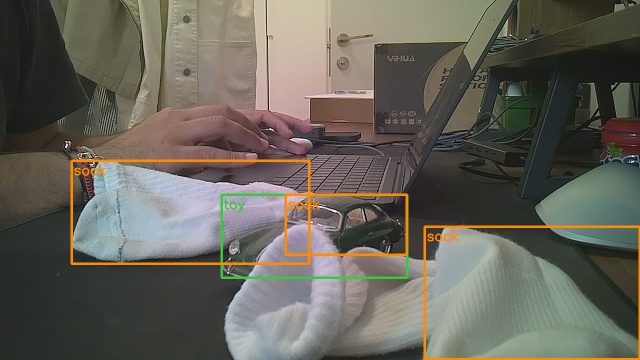
- COCO YOLO11 has no sock class: “mouse”
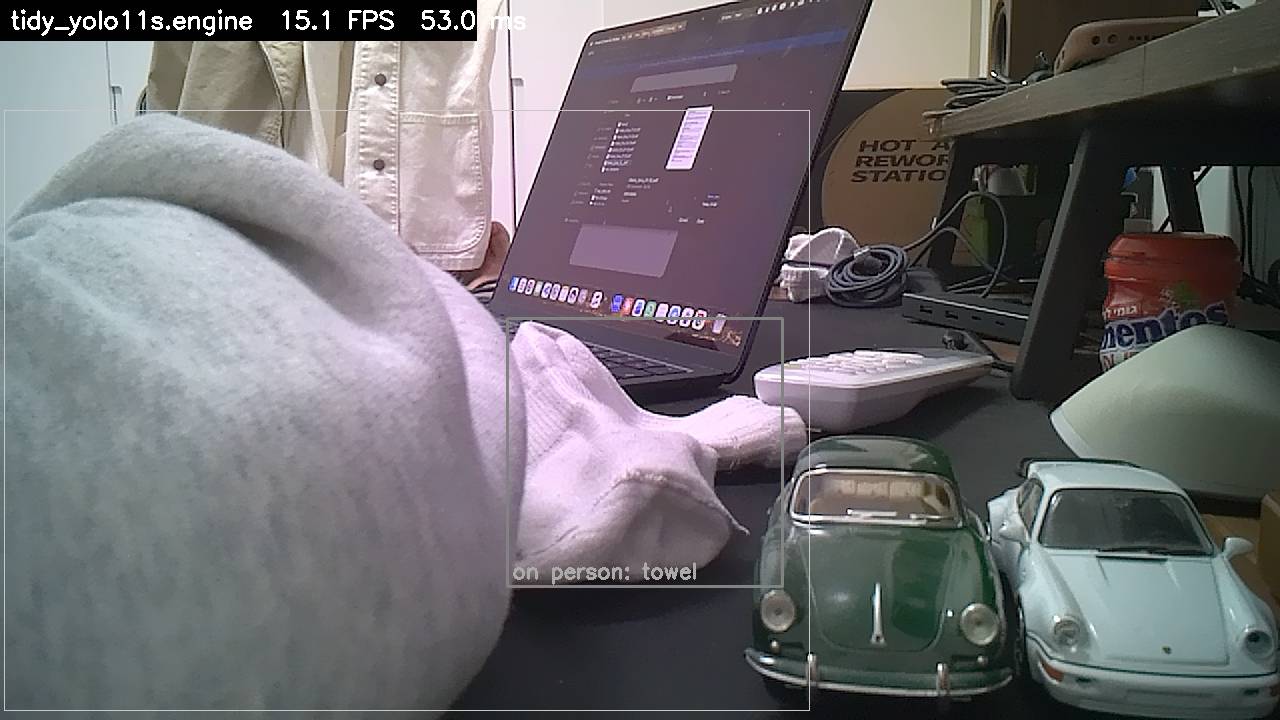
- Open-vocabulary YOLOE found the car but called the socks “towel”, and a CLIP re-check didn't help
DecisionKeep YOLOE to find objects, and ask a smarter model to name them.
04 · Vision, part 2
A vision-language model on 8 GB: from 44 s to 4.5 s
Qwen2.5-VL named every test crop right, but slowly.
Read more
- 13 of 13 crops correct, about 4.5 s per object
- Inside the live stream: 44 s per object, running on the CPU
ProblemMemory looked like the cause, but the real issue was elsewhere.FixLoad order. Loaded after the camera, the model fell back to the CPU. Loaded first, it took 4.4 to 7 s.
DecisionNo language model at runtime: too slow, too close to 8 GB. It only suggests training labels offline.
05 · Vision, part 3
Training my own detector, and a rule about people
A YOLO11s trained in the cloud, running on the Jetson in TensorRT without PyTorch.
Read more
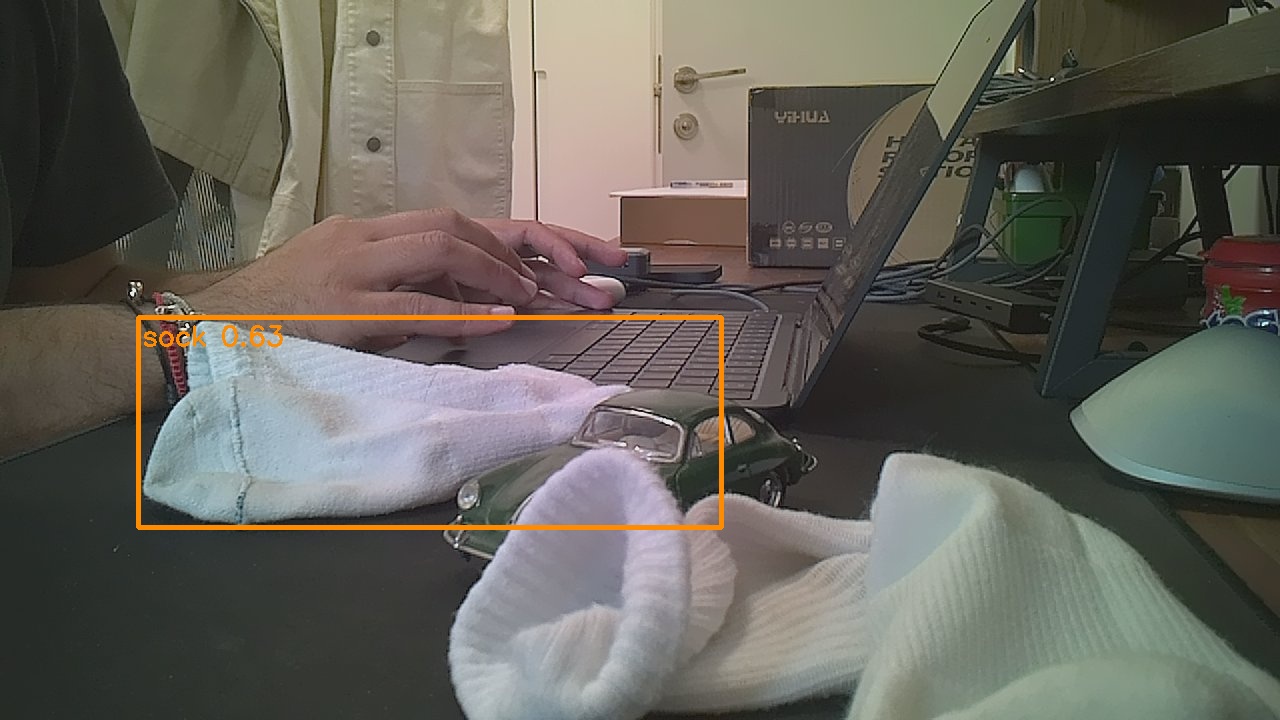
- Open Images, 8 classes, mAP50 0.57, about 24 FPS on the Jetson
- All clothes go to the laundry basket, so a sock/towel mix-up costs nothing
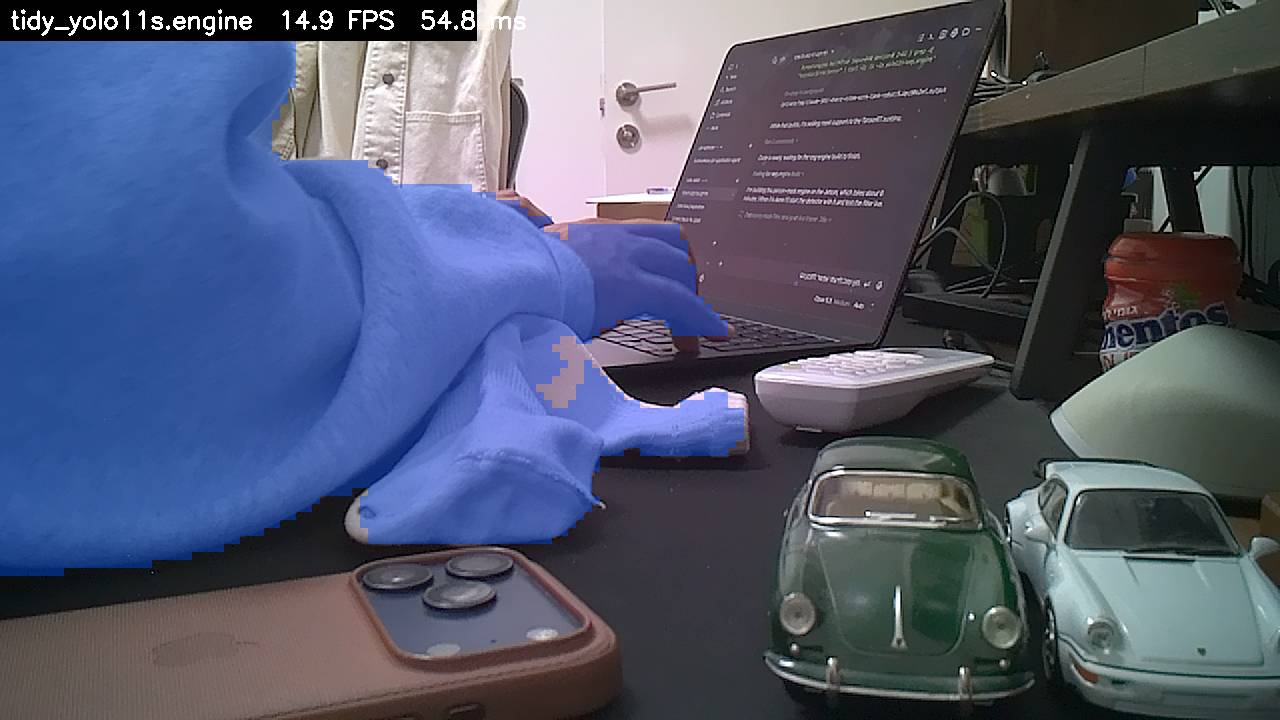
RuleNever target clothes someone is wearing.HowA person mask runs on every frame, and anything 30 % on a person is ignored (about 15 FPS with it).
ResultIt finds socks that the off-the-shelf models could not name.NextTraining continues on frames from the robot's own camera until it reaches the accuracy I want.
06 · Drive PCB
Designing my own drive PCB
I designed a custom PCB around the robot's exact requirements and sent it to manufacturing. The video is a 3D render of my design.
Read more
- My requirements: small (84 × 51 mm), the ESP32 plugs straight in, one XT60 for the 3S battery, and screw terminals for the motor cables
- Two DRV8874 motor drivers with about a 3 A limit per motor, and motor current and battery voltage read by the ESP32
- Reverse-polarity protection, and the motors stay off while the ESP32 boots
- Layout and routing generated by my own scripts (KiCad Python and Freerouting)
DecisionThe second version dropped the UART header and the JST plugs for screw terminals. Smaller, and no crimping.
ProblemThe assembler's preview showed the chips turned 90° and the XT60 facing inward.FixCorrected the rotations in the placement file and rechecked every polarised part.
07 · Encoders and first missions
Teaching Scrub to measure its own moves
The wheel encoders now tell the Jetson how far Scrub turned and drove, and it runs its first patrols on the floor. The video is a patrol at double speed.
Read more
- New ESP32 firmware counts the encoder signal edges and reports them every 50 ms, plus who is driving
- Calibrated by driving with the PS5: about 6,040 counts per metre and about 40 per degree of turn
- A 90° turn command ends at 90.9° by the encoders. Scrub learns how far it coasts after the motors stop
- Missions from a browser page with live video and a STOP button. Each mission is recorded to video
- Patrol: a full turn measured by the encoders, then back to the start heading
CheckA phone filmed from above to compare with the encoders.ResultThe 90° turn and a 30 cm drive matched. The turn back ended about 18° off while the encoders read 0.5°. A fix is in, not re-tested yet.
ProblemFrom floor height my trained model missed the toy cars, and a silver model car scored only 0.05 as “toy car”.FixFor now the open-vocabulary model runs with “car” added (0.89 on the same car), and a wider camera mode that sees more of the floor.
ProblemIt also boxes things that aren't toys, like the chair base in the video.NextExtra “decoy” classes (office chair, cable, box) are added to absorb these, not tested yet. Then fine-tuning on floor frames.